Why OpenAI’s New Funding Wave Signals a Bigger Shift in How AI Tools Will Actually Be Used

Ethan Walker
Add Subtitle gives brands and creators full control over how their message meets the world. Subtitles, voiceover, and translation—all in one tool to speed up your video workflow.
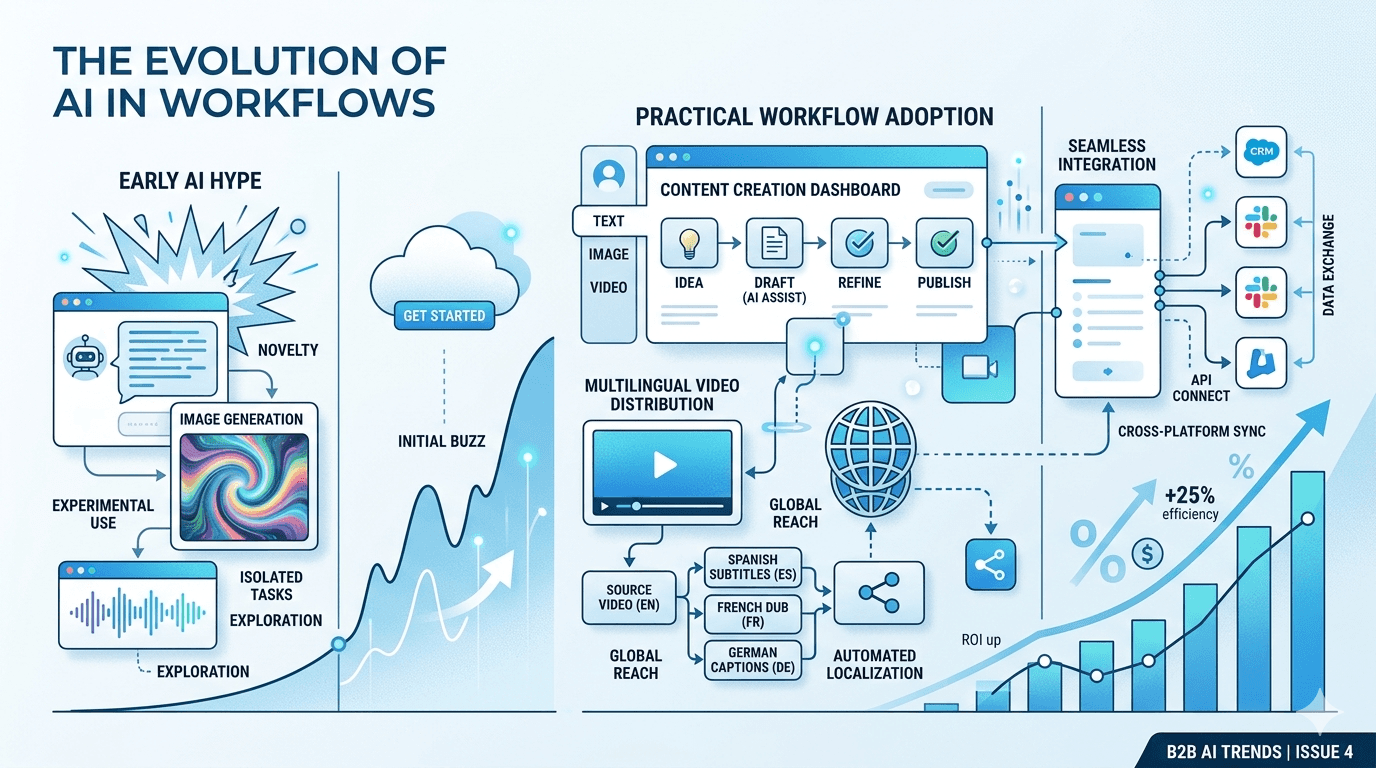
OpenAI’s latest funding news is being discussed as a sign of confidence in the future of AI. But for people who actually use AI tools every day, the more interesting story is not the valuation itself. It is what this level of investment says about the next stage of the market. AI is no longer being judged only by how surprising it feels. It is increasingly being judged by whether it fits into real work, real publishing, and real communication.
OpenAI’s latest funding round is not just a capital story. It reflects a broader market transition in which AI tools are being evaluated less for novelty and more for usefulness inside real workflows. For content, marketing, and video teams, that means the real advantage of AI is no longer only about generating more assets faster. It is about whether those assets can be refined, localized, understood quickly, and published efficiently across different platforms and audience contexts. As AI adoption scales, workflow-friendly tools that improve clarity and accessibility will become more important than hype alone.
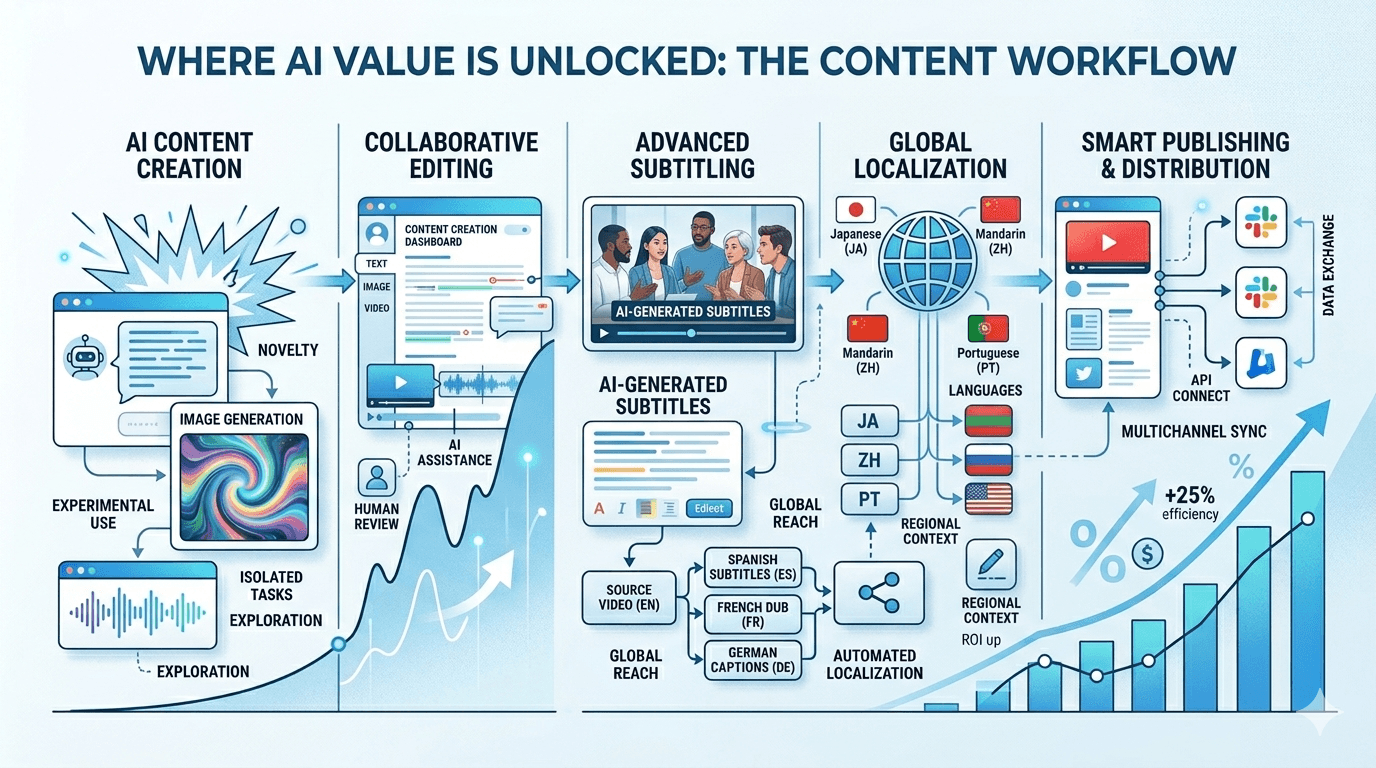
Headline: Turn AI-Generated Content Into Publish-Ready Video Faster
Body: AI tools can help teams create more content, but real performance depends on whether that content is clear, accessible, and ready for distribution. Addsubtitle helps turn videos into more usable assets with subtitles, multilingual support, and workflow-friendly output.
Button Text: Try Addsubtitle
AI is entering a workflow-driven stage
Many AI products can create a strong first impression. Fewer become part of everyday work. The difference is workflow value.
Content teams need tools that help them draft, edit, and publish. Video teams need tools that help them localize, format, and distribute. Design teams need tools that support fast iteration, not just impressive outputs.
As AI adoption grows, the strongest tools will be the ones people can use repeatedly with little friction.
Creation is only the first step
AI makes it easier to create content, but creation is only one part of the job. Once teams produce more assets, they also need to clean them up, adapt them, and prepare them for real channels.
That includes:
formatting for different platforms
improving clarity
making content accessible
localizing for other markets
turning drafts into publish-ready assets
This is where many workflows slow down. A tool may generate something quickly, but that does not mean the result is ready to perform.
Why usability matters more now
The next stage of AI competition will not be decided by demo quality alone. It will be shaped by usability.
A good AI tool should help people finish work, not create extra cleanup. In content and video workflows, that means helping users move from raw output to something clear and usable.
A video may look strong but still fail in silent autoplay. A campaign may have strong visuals but weak subtitle coverage. A generated asset may still require too much manual editing.
That is why usability is becoming a real growth advantage.
Why this matters for video and content teams
Content teams are under pressure to produce faster. Video teams are expected to create more versions for more platforms. Global teams need assets that can travel across languages.
In that environment, support layers become more important. Subtitle and caption workflows are a good example. They improve clarity, accessibility, and readiness for distribution.
That is also why Addsubtitle fits naturally into this shift. It supports the stage after creation, when content needs to become understandable, localized, and ready to publish.
Want to make AI-generated or AI-assisted videos easier to understand, localize, and publish? Explore Addsubtitle to add captions, improve accessibility, and prepare video content for wider distribution with less manual effort.
It's Free