The Rise of AI Video Agents: How Generative Video Is Transforming Content Creation

yifan Zhao
Add Subtitle gives brands and creators full control over how their message meets the world. Subtitles, voiceover, and translation—all in one tool to speed up your video workflow.
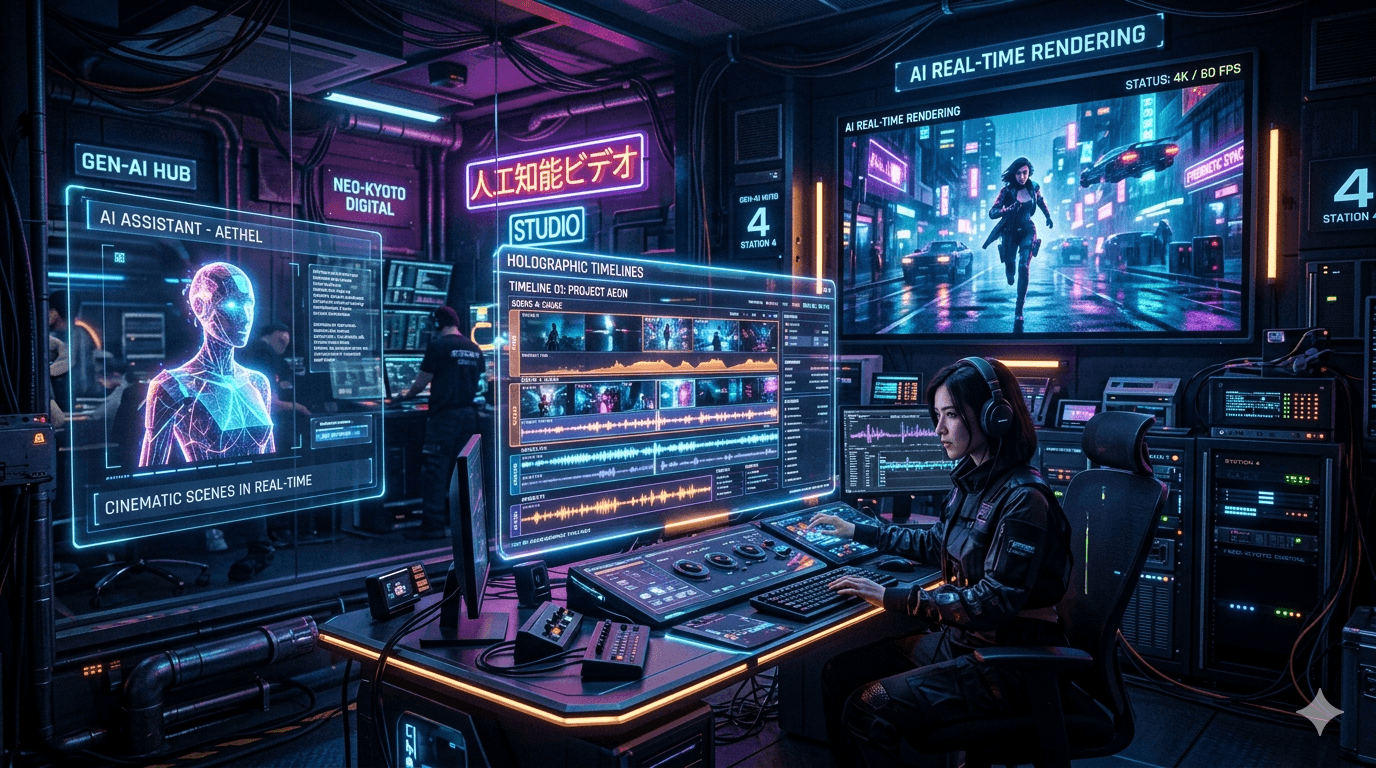
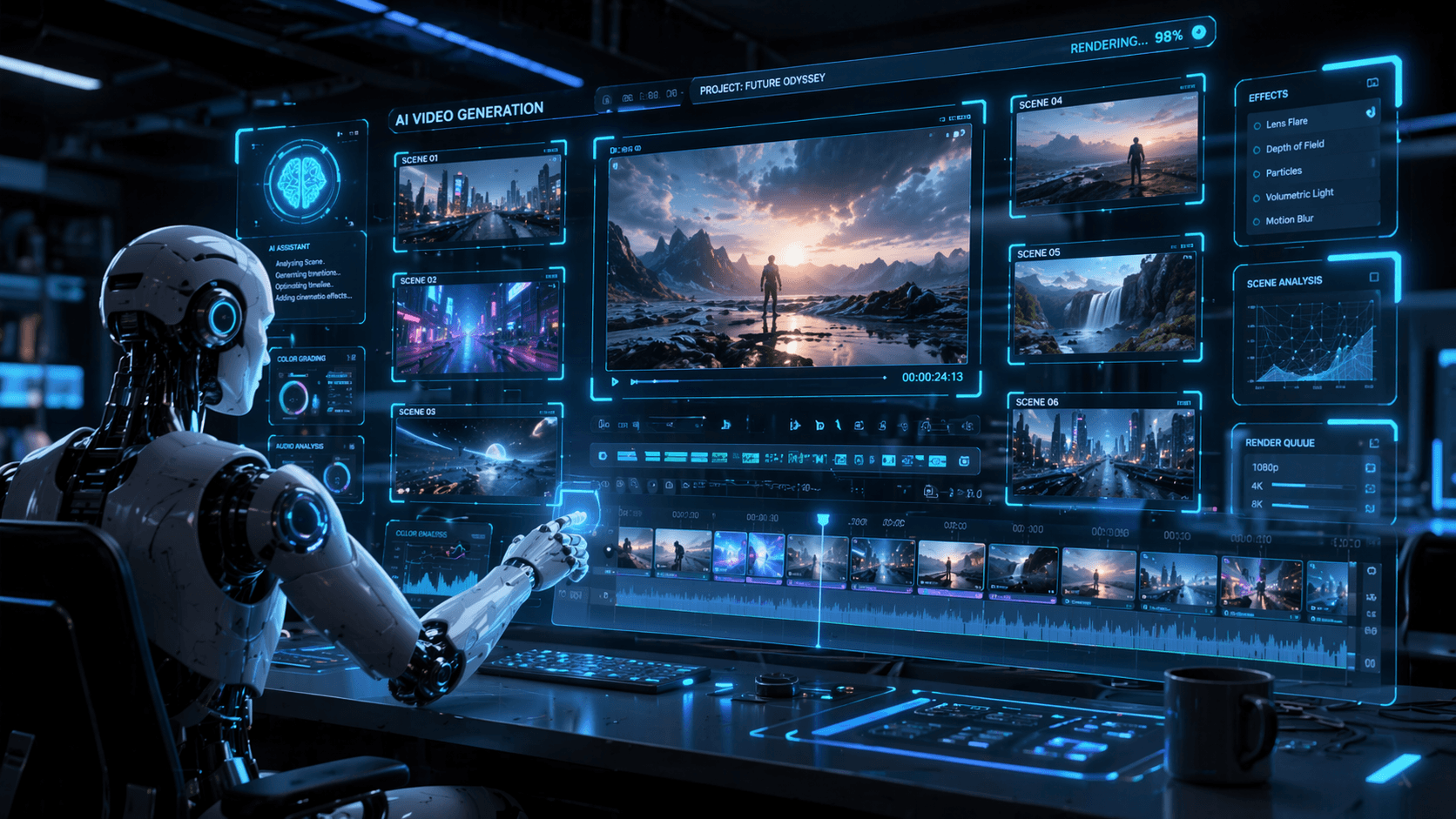
The world of content creation is entering a new era—one where AI doesn’t just assist but actively produces. With breakthroughs in generative video models like OpenAI’s Sora and tools like Runway, creators are no longer limited by traditional production pipelines. What once required cameras, crews, and weeks of editing can now be achieved in minutes through AI video agents.
These systems are not just text-to-video tools—they are evolving into autonomous creative collaborators. They understand narrative, continuity, and cinematic composition, enabling a shift from manual production to intelligent orchestration. As AI continues to integrate into creative workflows, the line between idea and execution is rapidly disappearing.
The emergence of AI video agents marks a transition from static content generation to dynamic storytelling systems. These agents can take a simple prompt and transform it into a fully realized visual narrative—complete with camera movements, lighting effects, and scene transitions. By automating complex production tasks, creators can now focus on ideation rather than execution.
addsubtitle: Empower your video content with AI-powered subtitles and localization, making your content globally accessible in seconds.
👉 [Register Now] → https://addsubtitle.com/register
The Shift from Editing Tools to Creative Agents
For years, video production tools have been reactive—they respond to human input but rarely take initiative. Editors manually cut clips, adjust transitions, and fine-tune timelines frame by frame. Even with automation features, the responsibility of storytelling has always remained with the creator.
AI video agents fundamentally change this dynamic. Instead of acting as passive tools, they function as proactive collaborators. Given a prompt such as “a cinematic sunset scene with a futuristic city,” these systems don’t just generate a clip—they interpret mood, pacing, lighting, and composition. The output is not a fragment but a coherent scene that aligns with narrative intent.
This shift redefines the role of creators. Rather than spending hours on technical execution, they now focus on high-level direction—defining story arcs, emotional tone, and audience experience. In many ways, AI is compressing the distance between imagination and output.
Multimodal Intelligence and Narrative Understanding
What makes modern AI video systems powerful is their multimodal capability. They are no longer limited to text inputs or static images; instead, they integrate text, motion, visual coherence, and even temporal consistency.
This means AI can maintain continuity across frames—ensuring that characters, environments, and lighting remain consistent throughout a sequence. It can simulate camera movements, depth of field, and even cinematic language such as “close-up” or “wide shot.”
More importantly, these systems begin to understand narrative flow. Instead of producing disconnected clips, they generate sequences that feel intentional. This opens the door to automated storytelling, where entire short-form videos—or even longer content—can be generated with minimal human intervention.
Speed as a Competitive Advantage
One of the most immediate impacts of AI video agents is speed. Traditional production pipelines involve scripting, shooting, editing, and post-production—often requiring days or weeks of effort. AI compresses this timeline dramatically.
Creators can now iterate rapidly. Instead of committing to a single concept, they can test multiple variations within minutes. This is particularly valuable in environments like social media marketing, where speed and adaptability are critical.
The ability to produce high-quality video at scale also changes competitive dynamics. Small teams—and even individual creators—can now compete with large production studios. The barrier to entry is no longer technical skill, but creativity and strategic thinking.
From Creation to Global Distribution
As video generation becomes easier, distribution becomes the next bottleneck. Creating content is only half the equation—ensuring it reaches and resonates with a global audience is equally important.
Language is one of the biggest barriers in this process. A video that performs well in one region may fail in another simply due to lack of accessibility. Subtitles, translations, and localization are no longer optional—they are essential for growth.
This is where tools like addsubtitle become critical. By automatically generating accurate subtitles and supporting multilingual distribution, creators can extend the reach of their content far beyond their native language. In the age of AI-generated media, accessibility is no longer a feature—it’s a strategy.
The future of AI is open, collaborative, and decentralized. Now is the time to explore how these tools can transform your workflow.
Make your content globally accessible with AI-powered subtitles 👉 https://addsubtitle.com/register
It's Free