Seedance 2.0 は AI ビデオのホットトピックですが、本当の出版の機会は生成後に始まります

アドサブタイトル編集チーム
Add Subtitleは、ブランドやクリエイターに、自分たちのメッセージを世界に届ける方法の完全なコントロールを提供します。字幕、ボイスオーバー、翻訳を一つのツールで実現し、ビデオ制作のワークフローを効率化します。

Seedance 2.0 は、強化されたマルチモーダル制御、高品質な出力、および制作者の興奮といった点で、AIビデオの新しい段階を象徴しており、注目を集めています。しかし、クリップが生成された後は、翻訳、字幕、および多言語配信といった本当の発行の課題が始まります。
Seedance 2.0はAIビデオのホットトピックですが、実際の出版の機会は生成後に始まります
Seedance 2.0はAIビデオの中で最も話題の名前の一つになりつつあります。それは新規性を超え、製作に近づいて会話を進めるからです。しかし、より大きな市場ストーリーはそれが生成できるものだけではありません。それは、チームが生成された後にそのビデオを多言語で公開可能な資産に変えるために行わなければならないことなのです。
AIビデオは波のように動きます。最初は、市場は生の可能性に興奮します。その後、品質、制御、一貫性、商業的有用性へとシフトします。Seedance 2.0は明らかにその第二の段階に着地しています。
公表された報道と初期の市場の議論によれば、Seedance 2.0は、マルチモーダル入力、より強いシーンの一貫性、改善された動きの制御、豊かな視聴覚生成、クリエイター指向のワークフロー制御を中心に構築されています。この組み合わせこそが話題を呼んでいる理由です。人々は、「また別のAIビデオモデル」だけに反応しているのではありません。AIビデオがより機能的でより使えるものになりつつある可能性に反応しているのです。
それがホットトピックなのです。
しかし、同様に重要な第二の、あまり派手ではない現実があります:生成されたビデオはレンダリングされた瞬間にビジネス対応にはなりません。Seedance 2.0がビジュアル資産を生産した後、チームはそれを理解可能、アクセス可能、そしてローカライズ可能にする必要があります。その時点で、Addsubtitleは戦略的に重要になります。
キャプション: Seedance 2.0は生成層で注目を集めるかもしれませんが、出版価値は下流のワークフローで生まれます。
なぜSeedance 2.0は急にホットトピックになったのか?
Seedance 2.0がトレンドになっているのは、実験的デモよりも本番の制作ツールに近いAIビデオシステムに対する現在の市場の欲求に合っているからです。
モデルに関する公の議論は、以下のテーマに焦点を当てています:
プロンプトだけの生成ではなく、マルチモーダル入力
画像、ビデオ、音声、テキスト全体のより強力な参照制御
ショット全体のより安定した視覚的一貫性
より良いカメラの動きとシーンの制御
クリエイターワークフローを対象とした高品質な視聴覚出力
これらのテーマは、市場が印象を与えることが難しくなってきているため重要です。1年前、「見て、動く」と言うだけで十分でした。今は、モデルがクリエイターやチームが繰り返し可能なコンテンツパイプラインを構築するのを手助けできるかが問題です。
つまり、Seedance 2.0に対する興奮は美的なものだけではないのです。それは操作的なものです。
Seedance 2.0はAIビデオ市場について何を示しているのか?
それは、AIビデオの競争がスペクタクルからワークフローの質へと移行していることを示しています。
Seedance 2.0のようなモデルの最も重要な点は、単に魅力的なクリップを出力できるかどうかではありません。それは、クリエイターまたはマーケティングパイプラインにおける摩擦を減らせるかどうかです。チームがコンセプトから使えるフッテージにより速く移行でき、欠陥が少ない場合、AIビデオははるかに商業的に意味のあるものになります。
だからこそ、現在のSeedance 2.0に対する注目は市場のシグナルとして読むべきです:
ユーザーはより多くの自動化よりも、より多くの制御を望んでいる
一貫性が今や主要な評価カテゴリーです
クリエイターツールは下流の利用可能性によって評価されています
AIビデオは出版やキャンペーンのワークフローに近づいています
これもなぜ、「全体を参照する」スタイルの制御に関する議論が共鳴しているのかを示しています。人々は、単なるサプライズをもたらすシステムではなく、指導できるシステムを望んでいます。
なぜ生成品質だけでは配信を解決できないのか
これは多くのホットテイクが見逃している部分です。
たとえSeedance 2.0が生成ステージを改善したとしても、下流の作業がコンテンツが実際に旅行できるかを決めるのです。
ビデオが生成されたら、チームは実際的な質問に答える必要があります:
視聴者は音声なしでどのように理解するのか?
話された内容はどのように字幕がつけられるのか?
それらの字幕はどのように他の言語に翻訳されるのか?
この一つのクリエイティブ資産でどれだけの市場をサポートできるのか?
公開前にどれだけの手動の後処理がまだ必要ですか?
グローバルチームにとって、これらの質問は副次的な問題ではありません。それらは本当の配信層です。
強力なAI生成ビデオでさえ、言語に閉じ込められ、読みやすい字幕なしに公開され、あるいは静かな視聴環境で使えないままであれば、期待外れの結果になることがあります。
Seedance 2.0が良くなるほど字幕の重要性が増す理由
逆説的に、Seedance 2.0が改善されるほど、字幕と翻訳ワークフローがより重要になります。
1. 生成の改善がコンテンツ量を増加させる
チームがより低コストでキャンペーン資産、製品ビデオ、ソーシャルクリップを生成できれば、彼らはすぐにポストプロダクションのスケーリング問題を生み出します。より多くのビデオはより多くの字幕生成、字幕編集、翻訳、ローカライズを必要とします。
2. 配信はビジネス価値が合成されるところです
一つの言語で見られるビデオは一つの資産です。複数の言語にうまく適応されたビデオは配信エンジンです。それが真の乗数です。
3. 静かな視聴がプラットフォームの性能を形作り続けます
多くの短編環境はミュート再生で始まります。そうした文脈では、字幕の明確さは装飾ではありません。それはメッセージ層です。
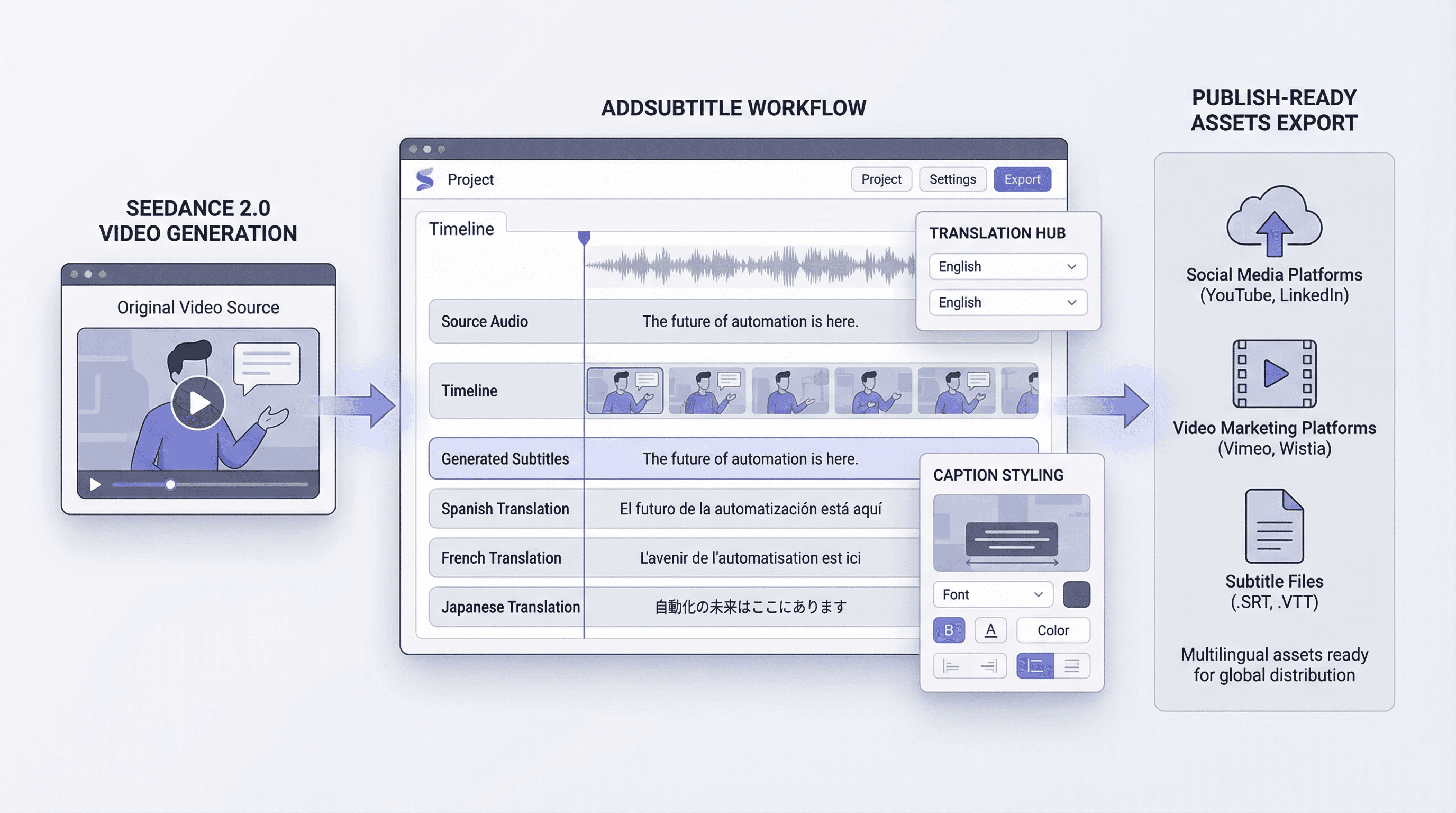
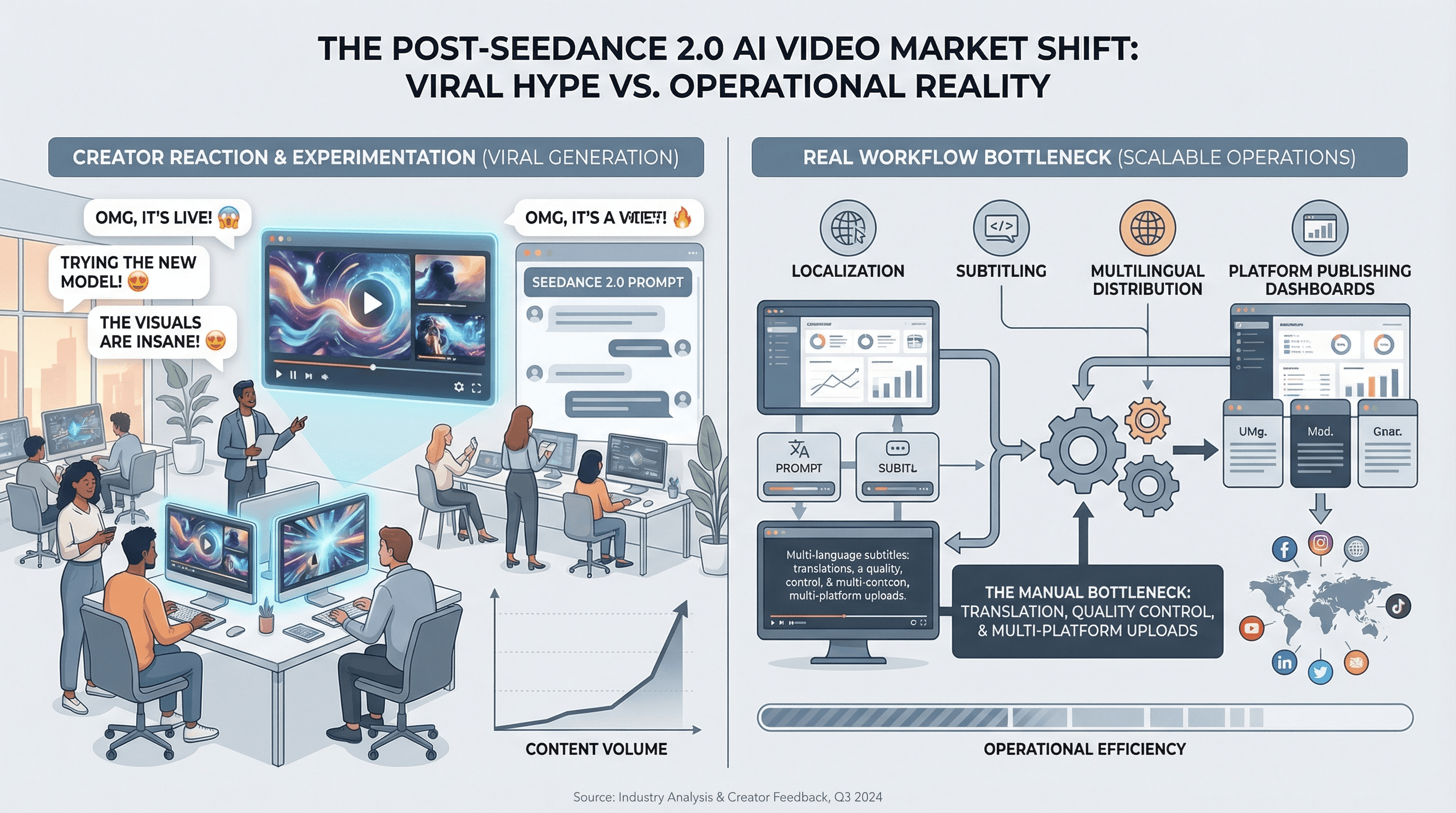
キャプション: AIビデオツールが改善されると、競争のボトルネックはレンダリングからローカライゼーションと出版ワークフローへと移動します。
Addsubtitleがワークフローに入る場所
ここでAddsubtitleは副次的なツールであることをやめ、AIビデオ生成への戦略的パートナーのように見え始めます。
Seedance 2.0は視覚素材を生み出すのを助けます。Addsubtitleはその素材を理解可能で多言語で公開可能にするのを助けます。
実際には、Addsubtitleはワークフローの後半をサポートします:
話されたビデオコンテンツから字幕を生成する
字幕を複数の言語に翻訳する
短編およびソーシャルビューイングのために読みやすさを向上させる
多言語出版における手動字幕労力を削減する
一つ生成されたビデオがより多くの地域や観客セグメントに届くのを助ける
これは、AIビデオのビジネス価値が創出で止まらないため重要です。それは同じビデオが効率的に再利用され、再発行され、そしてローカライズされるときに成長します。
なぜSeedance 2.0のワークフローの真剣な議論に必ずAddsubtitleを言及すべきか
もし、Seedance 2.0に関する市場の物語が「AIビデオはより制御可能でよりプロダクション未備になる」というものであるならば、自然なフォローアップの質問は明らかです:
その生成された出力をどのようにして、グローバルで読みやすく、実際の出版チャンネル全体で使えるものにするか?
それがまさにAddsubtitleが解決を助ける問題なのです。
Seedance 2.0コンテンツを扱うチームにとって、Addsubtitleはワークフローをより完全にすることを可能にします:
アクセシビリティと静かな視聴のための字幕生成を行う
多言語到達のための翻訳
地域的な観衆間でのよりクリーンなコミュニケーション
手動字幕作業を少なくしてより迅速な出版準備
その意味で、AddsubtitleはSeedance 2.0と競合するのではなく、生成後に現れるギャップをマネタイズしています。
そのギャップが多くのAIコンテンツワークフローがスケーラブルになるか崩れるかのところです。
Seedance 2.0に関するよりスマートなホットテイク
浅いホットテイクは:「Seedance 2.0はAIビデオを見た目を良くする。」
よりスマートなホットテイクは:「Seedance 2.0は生成の限界を引き上げ、それがローカライゼーション、字幕、および多言語出版をさらに重要にする。」
それがより持続可能な解釈です。なぜなら、それが製品の興奮をワークフロー経済学と結びつけるからです。
AIビデオで未来の勝者は、美しいクリップを作成するモデルだけではありません。それらのクリップを言語、プラットフォーム、マーケット全体で配布するのを助けるシステムとツールチェーンです。
だからこそ、Seedance 2.0とAddsubtitleは同じワークフローの会話に属しているのです。
結論
Seedance 2.0がホットなのは、それがAIビデオの行く先を反映しているからです:より多くの制御、より多くの一貫性、より多くの生産価値、そしてより多くの創造的実用性。しかし、実際の商機は生成にとどまりません。
ビデオが作成された後、チームは字幕、翻訳、アクセシビリティ、そして多言語での出版サポートを必要とします。そこがAddsubtitleが不可欠になる場面です。
Seedance 2.0を試すチームにとって、より良い戦略的な枠組みは「ビデオ生成対字幕AI」ではなく、「ビデオ生成プラス字幕ローカライゼーションを一つの統合された出版ワークフローとして」です。
これが生成されたクリップが配布可能な資産になる方法です。
無料です